Before my accident, I was the kind of person who kept moving. I was training for a marathon when I was hit. Rest was something you earned after the work was done, not something the work depended on.
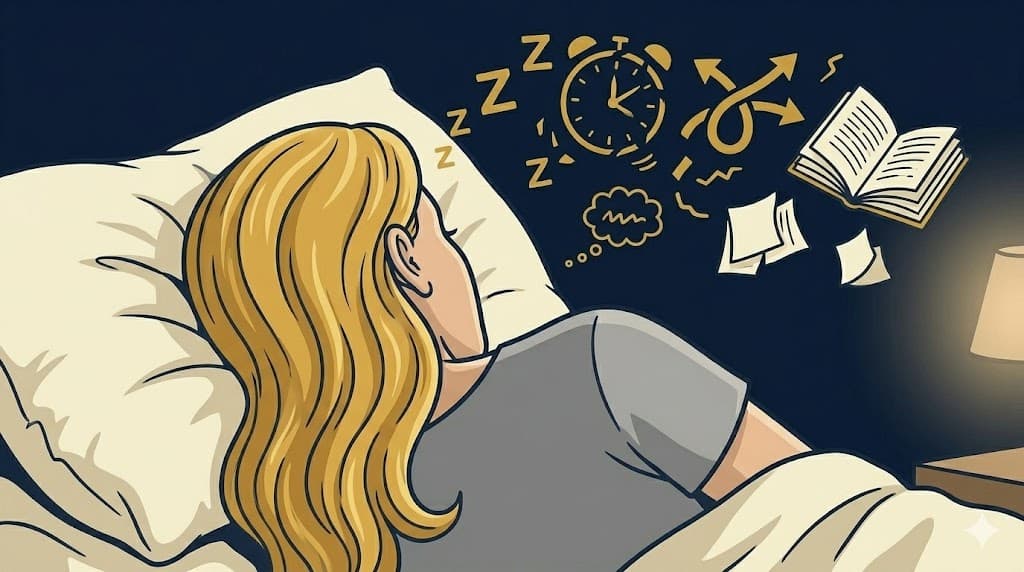
So it caught me off guard when, in recovery, I needed as much as nine hours of sleep a night, and naps on top of that. I struggled just to stay awake. For someone who had always run on momentum, that was humbling.
Rest was the work
My doctors helped me see it differently. The sleep was not me being lazy or falling behind. My brain was still rewiring itself, and the rest was part of how it did that. The naps were not a detour from recovery. They were recovery.
That reframe mattered more than I can say. When I stopped thinking of sleep as time lost and started thinking of it as healing happening quietly in the background, I could finally let myself have it.
The hard part was accepting it
I wish I could tell you I made peace with this easily. I did not.
My whole instinct was go, go, go. Never skip a beat. Keep up, look normal, do everything I used to do at the speed I used to do it. Lying down in the middle of the day felt like surrender. I was a young mom with so much I wanted to be present for, and resting felt like time I was stealing from my family and from the life I was trying to get back.
But my body kept score whether I agreed with it or not. When I pushed past my limits, especially in the loud or bright places that drained me, I would crash hard. There were times the only way back was to lie in silence for a couple of days. The rest I refused to take gently, my body ended up taking from me all at once.
A new normal, met with grace
Slowly, I came to accept that this was part of my new normal, and that accepting it was not giving up. A person healing from a brain injury needs real rest, the way a healing bone needs to be kept still. I had to give myself grace for that, the same grace I would have offered anyone else without a second thought.
I stopped apologizing for the nap. I started shaping my days around the truth of what my brain could handle, instead of pretending it was the same brain as before. As strange as it sounds, honoring the rest gave me more good hours, not fewer.
I am not a doctor, and this is not medical advice. Everyone's body and recovery are different, and yours will not look exactly like mine. This is simply what I learned about my own. The rest I kept resisting turned out to be one of the most important parts of getting better.
Noticing the pattern
One thing I did not have at the time, and wish I had, was an easy way to see how my sleep and my days fit together. How I slept really did shape what I had to give the next morning.
That is part of why the Sunrise app gently lets you note how you slept, right alongside everything else. Sleep has such a large effect on recovery that it deserves a place in the picture. Not as one more thing to get perfect, but as something to simply notice and honor.
Some nights you will sleep nine hours. Some days you will need the nap. After a brain injury, that is not weakness. For me, it was the work.
References
Mathias JL, Alvaro PK. Prevalence of sleep disturbances, disorders, and problems following traumatic brain injury: a meta-analysis. Sleep Medicine, 2012\. PubMed ID: 22705246\.
Model Systems Knowledge Translation Center (MSKTC). Sleep and traumatic brain injury. msktc.org