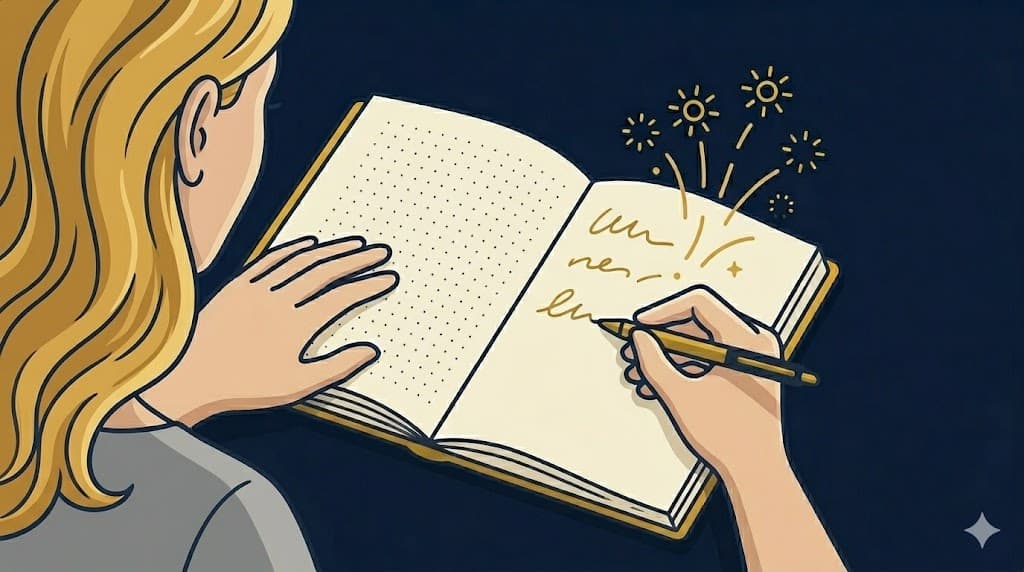
For years after my accident, whenever someone asked how I was, I gave the same answer. Good. I had a ten-second version of my story that I could recite without even thinking, and then I would move on. I was on autopilot. I wanted everything to be okay, so I told everyone it was.
Underneath that, the truth was harder. I knew I wanted to talk about everything that had happened to me, but I did not know how. I could not put my thoughts in order. They were all in there, tangled up, with no clear way out.
The page let them out
Writing is what finally gave them somewhere to go.
I did not set out to heal myself. I started writing to help other people, to put down what I had learned so that someone else's road might be a little easier. But somewhere in the middle of all those pages, something I did not plan happened. Writing and talking about these things, day after day, made me aware of trauma I had buried without even knowing it. In the end, writing ultimately healed me. It became a kind of therapy I had not gone looking for.
Why I keep writing things down
I have come to love putting things on paper, both to remember them and for the quiet relief of getting them out of my head. You do not have to be a writer to do this. You can write from your room, your backyard, even the carpool line. There is no such thing as too much.
And there are no rules. If what you write makes you uneasy, you can throw it away. Crumple it, shred it, be done with it. No one ever has to read a single word. The point was never to keep something perfect or permanent. The point is simply to get it out somewhere.
I am not a doctor, and none of this is medical advice. It is just what writing did for me, after a long time of carrying things I did not know how to say out loud.
A place to be honest
Some of what surfaced for me was grief. I had to mourn the person I was before the accident, and writing is part of how I finally let myself feel that instead of rushing past it. It did not happen on a schedule. As my therapist used to remind me, time does not matter. It is never too late to look at what you have been through.
So if you are recovering, or caring for someone who is, please be gentle about all of this. Some days a single line is plenty. Some days you will not write at all, and that is fine too. You can always begin again.
It is part of why the Sunrise app keeps a simple daily journal at its center. Writing carried me, and I wanted that within reach for anyone who needs a place to begin. A small space. A blank page. Yours alone.
That is all it ever took for me.
References
Wheeler L, Nickerson S, Long K, Silver R. Expressive writing in people with traumatic brain injury and learning disability. NeuroRehabilitation, 2014\. PubMed ID: 24284454\.
Pennebaker JW, Smyth JM. Opening Up by Writing It Down: How Expressive Writing Improves Health and Eases Emotional Pain.